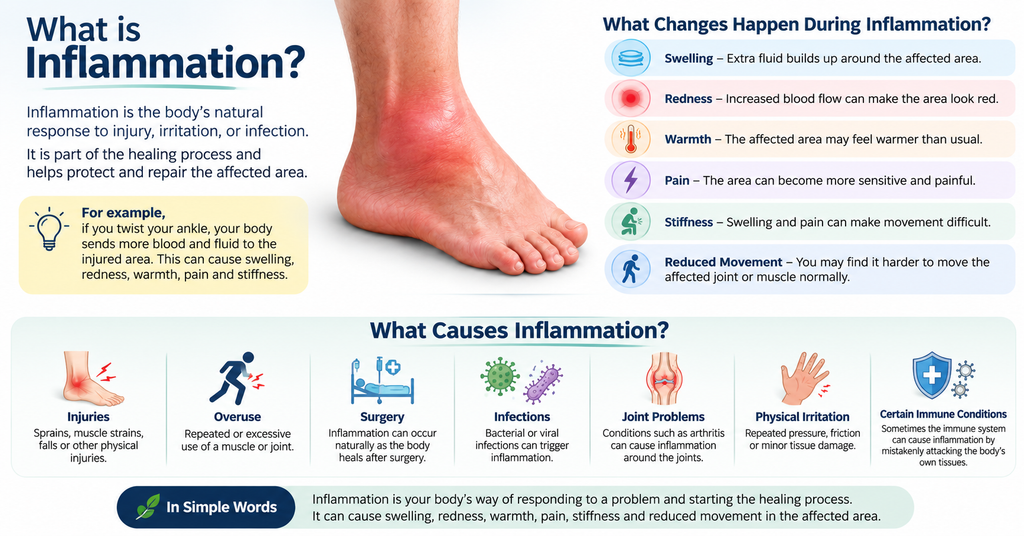
Inflammation is the body’s natural response to injury, irritation, or infection. It is part of the body’s healing process and helps protect and repair the affected area.
For example, if you twist your ankle, your body immediately responds to the injury. More blood and fluid move to the affected area, which can cause swelling, redness, warmth, pain, and stiffness.
What Changes Happen During Inflammation?
When inflammation occurs, you may notice:
Swelling – Extra fluid builds up around the affected area.
Redness – Increased blood flow can make the area look red.
Warmth – The affected area may feel warmer than usual.
Pain – The area can become more sensitive and painful.
Stiffness – Swelling and pain can make movement difficult.
Reduced Movement – You may find it harder to move the affected joint or muscle normally.
What Causes Inflammation?
Inflammation can happen due to several reasons, including:
Injuries – Sprains, muscle strains, falls, or other physical injuries.
Overuse – Repeated or excessive use of a muscle or joint.
Surgery – Inflammation can occur naturally as the body heals after surgery.
Infections – Bacterial or viral infections can trigger inflammation.
Joint Problems – Conditions such as arthritis can cause inflammation around the joints.
Physical Irritation – Repeated pressure, friction, or minor tissue damage.
Certain Immune Conditions – Sometimes the immune system can cause inflammation by mistakenly attacking the body’s own tissues.
How Does Physiotherapy Help Reduce Inflammation?
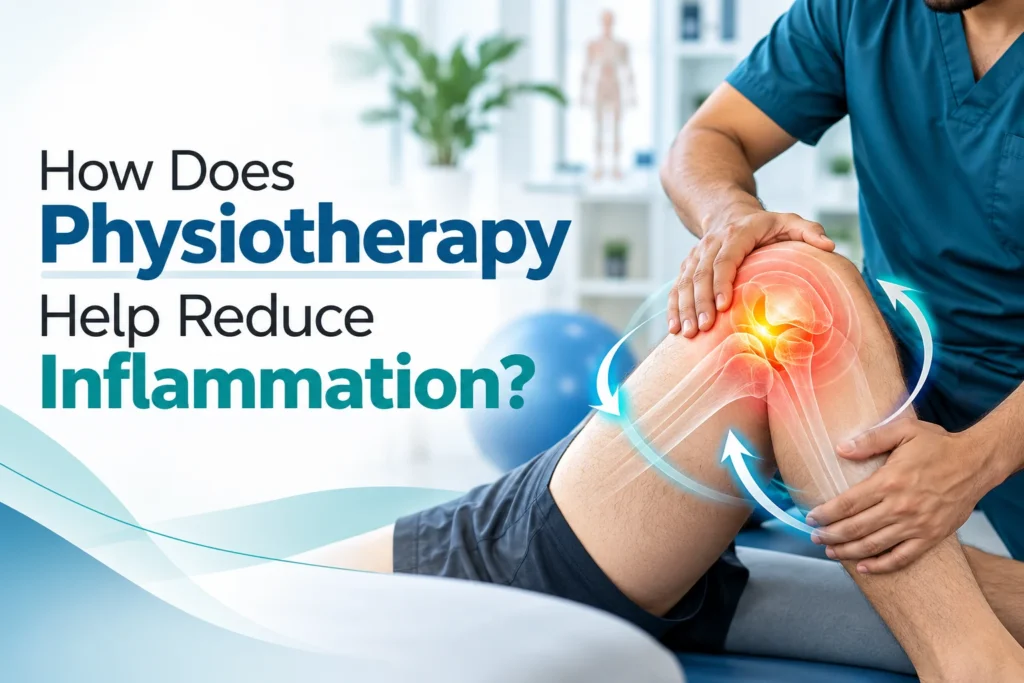
Inflammation is the body’s natural response to injury, irritation, overuse, infection, or certain medical conditions. It is part of the healing process and may cause pain, warmth, redness, swelling, stiffness, and difficulty moving the affected area.
Physiotherapy does not treat every type of inflammation in the same way. The treatment approach depends on what is causing the inflammation, which part of the body is affected, and how severe or long-standing the condition is.
After assessing your condition, a physiotherapist may use a combination of treatments to manage inflammation, reduce pain, improve movement, and support recovery.
How Can Physiotherapy Help?
1. Activity Modification
If a particular activity or movement is irritating the affected area, your physiotherapist may recommend temporarily modifying it to reduce unnecessary stress on the tissues.
2. Gentle Movement
Appropriate gentle movements can help maintain joint mobility and prevent stiffness while the affected area recovers.
3. Cold Therapy
For selected acute injuries, controlled cold therapy may help temporarily reduce pain and inflammation.
4. Manual Therapy
Hands-on techniques may help reduce stiffness, improve tissue and joint mobility, and make movement more comfortable.
5. Therapeutic Exercises
Specific exercises are introduced according to the condition to gradually improve mobility, strength, and function.
6. Stretching
When appropriate, gentle stretching can help reduce stiffness and restore flexibility around the affected area.
7. Strengthening Exercises
Once the acute symptoms settle, progressive strengthening helps the muscles and tissues regain their ability to handle normal activities.
8. Joint Mobilisation
For inflammation associated with restricted joint movement, graded joint mobilisation may help restore normal movement.
9. Soft-Tissue Techniques
Appropriate soft-tissue techniques may be used to address muscle and tissue tightness that is affecting movement.
10. Manual Lymphatic Drainage
For specific conditions involving the lymphatic system, a trained physiotherapist may use gentle manual lymphatic drainage techniques.
11. Taping
Certain taping techniques may be used as an additional treatment to provide support or assist with symptom management.
12. Hydrotherapy
Water-based exercises can allow easier movement with less stress on painful joints and may be useful for certain conditions.
13. Education & Home Exercises
Physiotherapy also helps you understand what movements to avoid, what exercises to perform, and how to gradually return to your normal activities.
The Goal Is More Than Reducing Inflammation
The aim of physiotherapy is not simply to reduce inflammation. It is to manage pain, restore movement, rebuild strength, address contributing factors, and help the affected area return to normal function.
Because the right treatment depends on the cause and stage of inflammation, a proper physiotherapy assessment is important before starting treatment.
When Should You Consider Physiotherapy?
If inflammation is affecting your movement, exercise, work, or everyday activities, getting the condition assessed can help you understand what is causing the problem and what type of treatment may be appropriate.
At Vybhav Wellmax Physio, each patient is assessed individually to understand the cause of their symptoms and determine the most appropriate physiotherapy approach. Treatment may include therapeutic exercises, manual therapy, mobility training, and other techniques depending on the condition.
With the right guidance and a personalised treatment plan, physiotherapy can help you manage symptoms, restore movement, and get back to the activities you enjoy.
Medically Reviewed By Dr. Vybhav S
Senior Physiotherapist Vybhav’s WellMax Physio This article has been medically reviewed for clinical accuracy by our Senior Physiotherapist. The information provided is for educational purposes only and should not replace professional medical advice, diagnosis, or treatment.
About the Author
Vybhav S
Dr Vybhav S is an accomplished musculoskeletal and sports rehabilitation specialist with over 15 years of clinical expertise. As the Founder and Chief Physiotherapist of WellMax Physio, he is dedicated to delivering advanced, evidence-based rehabilitation solutions.