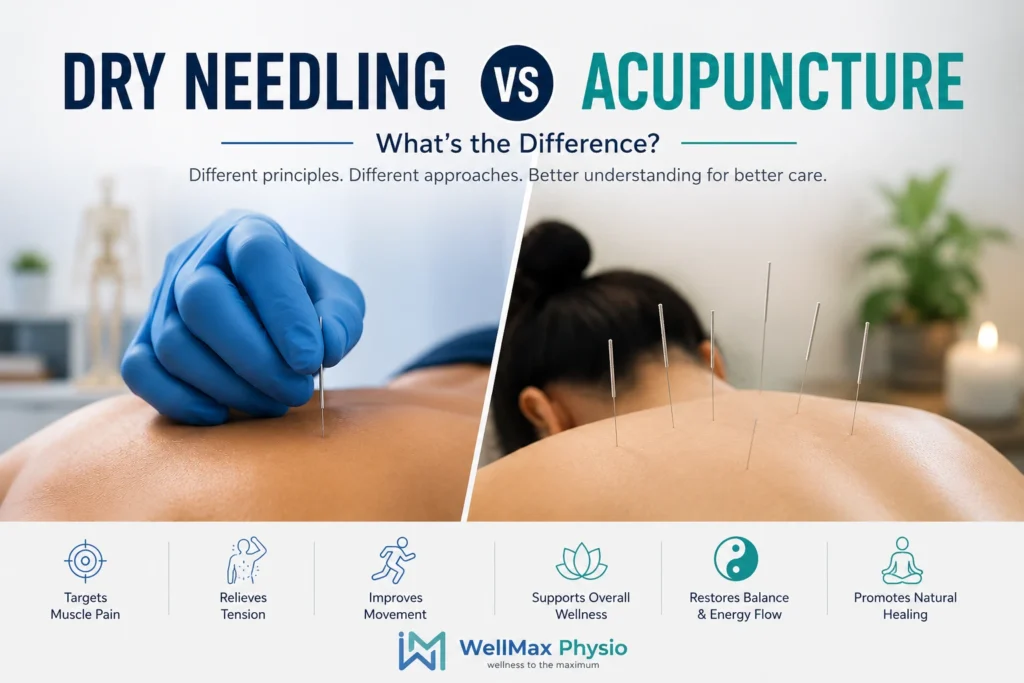
Many people often confuse dry needling and acupuncture because both treatments involve the use of thin needles inserted into the skin. However, these two therapies are based on different medical principles, purposes, and treatment approaches.
Understanding the difference between dry needling and acupuncture can help patients choose the right treatment for their condition. In modern physiotherapy practice, physiotherapy dry needling is widely used to treat muscle pain, trigger points, and movement restrictions.
What Is Dry Needling?
Dry needling is a modern physiotherapy technique designed to treat musculoskeletal pain and myofascial trigger points. A trained physiotherapist inserts a thin, sterile needle into tight muscle bands or trigger points to relieve tension and restore normal muscle function.
Trigger points are sensitive knots in muscles that can cause:
- Local muscle pain
- Referred pain to other areas
- Muscle stiffness
- Reduced range of motion
By targeting these trigger points, physiotherapy dry needling helps relax tight muscles, improve blood circulation, and reduce pain.
Benefits of Dry Needling
Dry needling can be effective for treating a variety of conditions, including:
- Neck and shoulder pain
- Lower back pain
- Sports injuries
- Muscle tightness and spasms
- Tennis elbow
- Sciatica
- Myofascial pain syndrome
This technique is often combined with exercise therapy, manual therapy, and rehabilitation programs to achieve the best results.
What Is Acupuncture?
Acupuncture is a treatment method that originates from traditional Chinese medicine (TCM) and has been practised for thousands of years. It is based on the concept that the body’s energy, known as Qi (pronounced “chee”), flows through pathways called meridians.
In acupuncture, needles are inserted at specific points along these meridians to restore balance in the body’s energy flow.
Acupuncture is often used to help manage conditions such as:
- Chronic pain
- Headaches and migraines
- Stress and anxiety
- Digestive problems
- Sleep disorders
Unlike dry needling, acupuncture focuses on overall body balance and wellness, rather than targeting specific muscle trigger points.
| Aspect | Dry Needling | Acupuncture |
| Medical Approach | Based on modern Western medicine and musculoskeletal science | Based on traditional Chinese medicine and energy balance concepts |
| Primary Purpose | Relieves muscle pain and releases trigger points | Restores the flow of energy (Qi) in the body |
| Treatment Focus | Targets tight muscles, trigger points, and soft tissues | Targets specific acupuncture points along energy meridians |
| Conditions Treated | Muscle pain, sports injuries, neck pain, back pain, joint dysfunction | Stress, migraines, digestive issues, chronic pain, and hormonal imbalance |
| Practitioners | Performed by trained physiotherapists | Performed by licensed acupuncturists or traditional medicine practitioners |
| Treatment Goal | Improve muscle function, mobility, and pain relief | Promote overall health and energy balance |
| Clinical Use | Commonly used in physiotherapy rehabilitation programs | Used in holistic and alternative medicine treatments |
Is Dry Needling Painful?
Many patients worry about the discomfort associated with dry needling. In most cases, the sensation is very mild and temporary.
When the needle reaches a trigger point, you may feel:
- A brief muscle twitch
- Mild pressure or tingling
- Slight soreness after treatment
These reactions are normal and often indicate that the muscle is responding to the treatment.
Why Physiotherapists Use Dry Needling
Physiotherapists use dry needling as part of a comprehensive treatment approach. It is rarely used alone and is usually combined with other physiotherapy techniques such as:
- Manual therapy
- Therapeutic exercises
- Stretching programs
- Postural correction
- Rehabilitation training
This integrated approach helps address the root cause of pain, ensuring long-term recovery and improved function.
When Should You Consider Dry Needling?
You may benefit from physiotherapy dry needling if you experience:
- Persistent muscle tightness
- Chronic neck or back pain
- Limited range of motion
- Muscle knots or trigger points
- Sports-related muscle injuries
A proper physiotherapy assessment can determine whether dry needling is suitable for your condition.
Conclusion
Although dry needling and acupuncture both involve the use of thin needles, they differ significantly in their medical principles, treatment goals, and clinical application.
While acupuncture focuses on restoring the body’s energy balance, physiotherapy dry needling targets muscle trigger points to relieve pain and improve movement. When performed by trained professionals, dry needling can be an effective treatment for many musculoskeletal conditions.
If you are experiencing persistent muscle pain or stiffness, consulting a qualified physiotherapist can help identify the underlying cause and provide the most appropriate treatment approach.